


How to Use Blacken
Welcome to Cap'n Ron's
The Butt Kickin' Blacken and Spice Blends are quite different than those you might find on your grocery stores shelves. These spices conatain No Salt and No Sugar. As you read the information below, and my over 350 recipes, you'll have to keep this in mind and adjust salt content in you cooking accordingly. It's not uncommon for some of those "Supermarket" Cajun Seasonings to have up to 25% Salt. Another term for my Seasoning Blends would a Cajun Seasoning.
Butt Kickin' Blacken is much more than just a "Hot", Cajun, seasoning blend. When used as a light dusting, it enhances the flavors of your meal, rather than just giving an overpowering "Blackened" flavor. Most of the recipes offered on this site are designed to be medium hot. But, you can adjust them to be hot, or not, depending upon the amount of blacken you use.
Using Blacken on a Grill
Although a lot of you probably don't cook on a grill as often as I do, that's my favorite way to cook almost anything. You can use it liberally in a Marinade or Brine for any meat, or, use it as a "Rub" and coat the meat prior to grilling.When putting directly on any meat destined for the grill, I'll usually oil the meat first, then add Butt Kickin' Blacken, a little Coarse Kosher Salt, and Dark Brown Sugar. The amounts change, based what I'm cooking. A good start is to try my "Butt Kickin Rub", or my "Cocoa Rub". The oil helps the meat sear, and keep it's juices from evaporating during cooking. and the Kosher Salt won't melt in the heat of the grill or dry out the meat. It will actually crust up from the heat and lose a lot of it's saltiness. So, when you're grillin' over high heat, don't be afraid to use a little more Coarse Kosher Salt or Blacken than you think you should.
And, make sure you go to the recipe section to see some of my more common uses for Butt Kickin' Blacken, I've got over 350 recipes posted, including desserts. Plus, be sure to e-mail me with some of the ways you've found to use my special spice blends.
Blackening on a Stovetop
A lot of you have mentioned that you've tried to use Butt Kickin' Blacken on Seafood or Chicken in a screaming hot, black frying pan. Although, this is considered the traditional method to blacken something, it takes a little know how to make sure that the outside of the meat is blackened, without being burnt and inedible, while still have the meat done in the middle. Here are 4 methods that will help you Blacken a piece of Chicken, Fish, Steak, or Hamburgers in a frying pan.If you remember nothing else from this page remember this. "The heat of your pan should be adjusted to the thickness of the meat you're cooking." Turn the heat to medium for a thicker piece of meat, and higher for thinner pieces. This permits the inside to cook, without burning the outside.
Fry Pan, Method #1:
For chicken, slice the meat in half, horisontally, it should be only 1/2" thick, season liberally with Butt Kickin' Blacken, and a little Coarse Kosher Salt. Coarse Kosher Salt is a coarse grained salt that won't melt in the heat, and helps to form a crust. Even though it won"t melt in heat, like table salt, it will melt in liquid. Once you begin using it, you'll find that that's the only salt you'll be cooking with.Place a well seasoned, black frying pan on the stove and turn the heat up. When the pan just begins to smoke, add 1 tablespoon of oil, then the chicken. Let sit, without moving it around, for 1 - 2 minutes. Flip, and cook for another 1 - 2 minutes. Because you sliced the meat fairly thin, the insides will be cooked at this point, and ready to eat. If it's still pink, you can place the whole frying pan into a 350 degree oven until it's done.
Fry Pan,Method #2:
Use this method when you want to "blacken" a thicker pieces of either chicken or seafood.Preheat the oven to 350 degrees. Prepare the meat, by coating it liberally with Butt Kickin' Blacken and a little Coarse Kosher Salt. Get a black frying pan smokin' hot, add 1 tablespoon of oil, and place the meat in. Cook for 2 minutes, without moving it around, flip and cook for an additional 2 minutes. Place the meat on a small pan, I use a small sheet pan, covered with parchment paper, for easy cleanup, and place it in the oven until the meat is cooked through.
Fry Pan,Method #3
This is another way of blackening a thick piece of Steak on a stove. Always rmember: The thicker the meat, the lower the temperature of your pan.Season the meat liberally with Butt Kickin' Blacken, and a dusting of Coarse Kosher Salt, your not cooking on the grill where the salt will burn and crust so use sparingly. Get a fry pan heated to medium heat, I prefer a Stainless or Teflon lined pan for this method. The stainless will provide some nice flavors (fond) after you're finished cooking that you can make into a "pan sauce". Place 1 tablespoon of butter, and 1 tablespoon of vegetable oil in the pan, then place the meat in. The oil will raise the burning temperature of the butter, yet you'll still get that buttery flavor.
Using a lower temperature will let the inside of the meat cook without burning the outside. I almost always use this method when I cooking a thick piece of Fish, Steak or a 1 1/2" Pork Chop in a frying pan.
If you've used a stainless steel frying pan, you can de-glaze the pan with a little beef or chicken broth, or, a little wine. Thicken with a cornstarch slurry, 1 tablespoon cornstarch mixed with ½ cup cold water. And you've just made a sauce that will compliment the flavor of whatever meat you've cooked. Instead of the cornstarch slurry, you could add a little heavy whipping cream, and reduce until it's thick enough to serve. This reduction method produces a sauce who's flavors are very concentrated, so serve it sparingly.
This method will provide all the flavor of a blackened meal without being burnt.
Fry Pan,Method #4
This is another way of blackening a real thick piece of meat on a stove.Season the meat liberally with Butt Kickin' Blacken, a little Kosher Salt. Get a fry pan heated to medium / low heat, I prefer stainless for this method. Place 1 tablespoon of butter, and 1 tablespoon of vegetable oil in the pan, then place the meat in. The oil will raise the burning temperature of the butter, yet you'll still get that buttery flavor.
If you're cooking a piece of beef that's 2" thick, you'll want to turn the heat down to low after you've placed it in the pan, or you'll burn it before it's done. Cook until a good crust has formed on the first side, flip and continue to cook to your desired internal temperature. I'll sometimes use this method for 2" thick , and I'll cook it to 110 degrees on an instant read meat thermometer for rare. If you find that the meat is burning too fast, you can turn the heat down a little more, and put a lid on. The lid will turn the frying pan into a mini oven-like appliance, and help the inside of the meat to cook faster without drying out the meat because you've already seared it.
If you've used a stainless steel frying pan, you can de-glaze the pan with a little beef or chicken broth, or, a little wine. Thicken with a cornstarch slurry, 1 tablespoon cornstarch mixed with ½ cup cold water. And you've just made a sauce that will compliment the flavor of whatever meat you've cooked.
In fact, one of my favorite ingredients for de-glazing a pan that I've cooked beef in is an inexpensive Ruby Port Wine, Balsamic Vinegar, and a little sugar. Let this reduce until it's a syrup, and add a little heavy whipping cream to make a sauce. Turn the heat off, and add about 6 tablespoons of room temperature butter. Add one at a time, and stir until it's melted before you add the next piece. You'll end up with a terrific Port Wine sauce, that's rich and shiny.

I'd love to hear your thoughts on this recipe, or any other of my recipes you've either looked at or tried.
- Whether or not you like this recipe and why.
- How you'd like to see it different.
- Suggestions for new recipes I could post.
- Recipes you've made using Butt Kickin' Blacken.



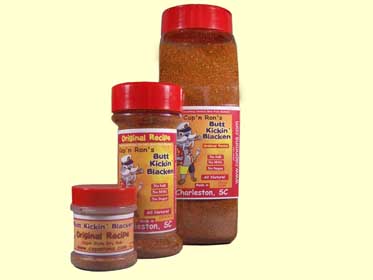
Butt Kickin' Blacken
All these spice blends contain No Salt and No Sugar.
Butt Kickin' Blacken is available in an assortment of flavors to suit any type of cooking.
ORDER SOME TODAY!

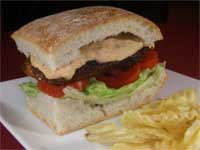
Blackened Chicken Sandwich
Using Blacken in a Frying Pan.
Smoked Prime Rib
Using blacken as a "Rub" for Smoking.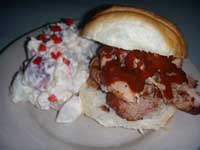
Oven Baked, Pulled Pork
Using blacken as a "Rub" in an Oven.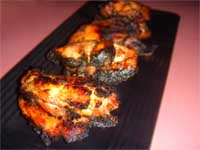
Orange Jerked, BBQ Chicken Thighs
Using blacken in a "Mop" on a Grill.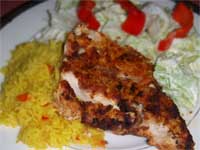
Backened Mahi Mahi
Using blacken with Seafood.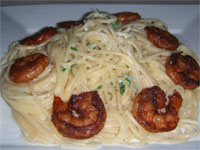
Blackened Shrimp Fettucini
Using blacken in a hot pan.